






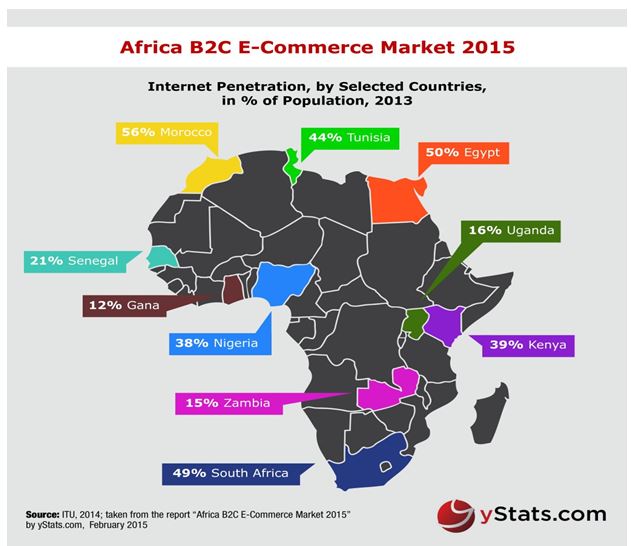


Cross border e-commerce continues to provide significant growth opportunities for retailers and manufacturers with an international online product offering.
According to a 2017 DHL report, cross-border retail volumes are predicted to increase at an annual average rate of 25% between 2015 and 2020 (from USD 300 Billion to USD 900 Billion) – twice the pace of domestic e-commerce growth.
Steve Burd, Vice President of Sales for DHL Express Sub-Saharan Africa, says that this highlights a boundless opportunity for African businesses looking to take a piece of the cross border e-commerce pie.
Burd says that as the market leader in express logistics, DHL Express works with thousands of e-commerce customers around the world, with a lot of them at start-up phase. “We are therefore well aware of the perceived hurdles involved when considering to trade across borders.”
He points to five common areas which domestic e-commerce customers consider to be a challenge when deciding where to trade internationally.
1. The cost of express shipping
There is no risk at offering your customers an express delivery option, says Burd. “Customers want choice, not only in their product selection, but also when and how they receive it. In our experience, customers are willing to pay a fair price for a faster, more efficient service.”
2. Returns rates
“We’ve found that the return rates are actually much lower on international shipping. Businesses could always do it on a trial basis and measure the benefits over losses and adjust their strategies accordingly.”
3. Basket values
“We have found that basket values often increase with the introduction of express shipping. Customers tend to buy more to justify the premium shipping costs.”
4. The customer’s business is doing well locally
Evidence shows that international customers will spend significantly more than local ones, says Burd. “So even if international traffic to your website is small, it can be worth a lot for limited effort. There are free online tools available which will give you an indication of your international traffic on your website – this will provide an idea of which countries to focus your efforts on. There is no risk in opening doors to the international market – only the risk of getting left behind.”
5. Unfamiliarity with customs procedures and processes
“This is where your choice of delivery partner comes in. If your paperwork has been done correctly, there shouldn’t be any customs delays or worries. Collaborating with an experienced partner that has extensive knowledge and know-how of customs procedures on the African continent will assist the business’ e-commerce offering to evolve.”
To further connect and support the e-commerce industry in Africa, DHL Express recently signed on as title sponsor for the 2018 DHL eCommerce MoneyAfrica Conference & Exhibition (Confex), taking place on 14 and 15 of March this year.
“The DHL eCommerce MoneyAfrica Confex has established itself as one of Africa’s biggest opportunities to bring stakeholders in the fintech and e-commerce sectors together. This year’s event features presentations and knowledge sharing from an array of African and international thought leaders, geared at enabling participants to formulate innovative strategies to unlock more opportunities on the continent,” concludes Burd.
















