






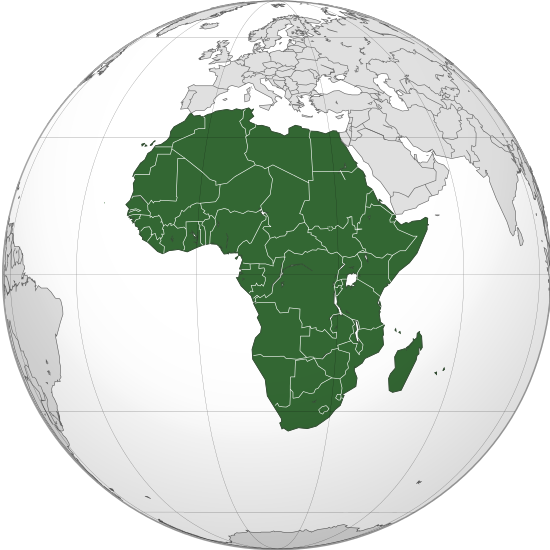


According to EY’s 2016 Africa Attractiveness Program 2016, Staying the Course, despite a relative slow down, Sub-Saharan Africa remains one of the fastest growing regions in the world.
This is reflected in the foreign direct investment (FDI) levels in 2015, where FDI project numbers increased by seven percent.
Although, the capital value of projects was down year-on-year — from US$88.5b in 2014 to US$71.3b in 2015 — this was still higher than the 2010–2014 average of US$68b. Similarly, jobs created were down year-on-year, but, again ahead of the average for 2010–2014.
Ajen Sita, Africa Chief Executive Officer at EY, comments, “Over the past year, global markets have experienced unprecedented volatility. We’ve witnessed the collapse of commodity prices and a number of currencies across Africa, and with reference to the two largest markets, starting with South Africa, we saw GDP growth decline sharply to below one percent and the country averting a credit ratings downgrade; in Nigeria, the slowdown in that economy was impacted further by the decline in the oil price and currency devaluation pressure.”
Sita adds: “The reality is that economic growth across the region is likely to remain slower in coming years than it has been over the past 10 to 15 years, and the main reasons for a relative slowdown are not unique to Africa. In fact, Africa was one of the only two regions in the world in which there was growth in FDI project levels over the past year.”
East Africa closes the FDI gap, with Kenya a big gainer
In 2015, East Africa recorded its highest share of FDI across Africa, achieving 26.3% of total projects. Southern Africa remained the largest investment region on the continent, although projects were down 11.6% from 2014 levels.
The West Africa region saw a rebound in FDI projects by 16.2%, and interestingly in 2015, the region became the leading recipient of capital investment on the continent, outpacing Southern Africa.
North Africa experienced 8.5% year-on-year growth in FDI projects. Furthermore, while projects are increasing in North Africa, they are increasing at a much faster rate in Sub-Saharan Africa.
Michael Lalor, EY’s Africa Business Center Leader, adds: “In a context of heightened concerns about economic and political risk across the continent, FDI flows remain robust, and in line with levels we have seen over the past five years. A key factor here is the structural shift in FDI — from a high concentration of source countries and destination markets and sectors, to a far more diverse FDI landscape. As a result, risks and opportunities are being spread much wider, and there is no longer an overdependence on a limited group of investors or sectors to drive FDI performance.”
Historical investors gain strength, new investors emerge
The US retained its position in 2015, as the largest investor in the continent, with 96 investment projects valued at US$6.9b. During 2015, traditional investors such as the UK and France, as well as the UAE and India, also showed renewed interest in Africa.
Investors diversify focus across sectors
Over the past decade, there has been a shift in sector focus in FDI from extractive to consumer-facing industries. Mining and metals, coal, oil and natural gas, which were previously the key sectors attracting major FDI flows, have given way to Consumer Products and Retail (CPR), financial services and Technology, Media and Telecommunications (TMT), accounting for 44.7% of FDI projects in 2015. In 2015, further evidence of sector diversification came through, with business services, automotive, cleantech and life sciences all rising in significance and becoming the likely “next wave” for investors.
Striking a balance between growth, profitability and managing risk
Sita concludes: “Given the growth potential in and relative underdevelopment of many African markets, the primary focus for many companies over the past few years has been on entering new markets, capturing market share and driving revenue growth. A combination of factors — including tightening economic conditions, increasingly well-informed consumers and citizens, intensifying competition, a heightened sense of global geopolitical uncertainty, and shifting priorities from global or regional HQ — is now driving a change in focus toward striking a greater balance between growth, profitability and risk management.”
















