


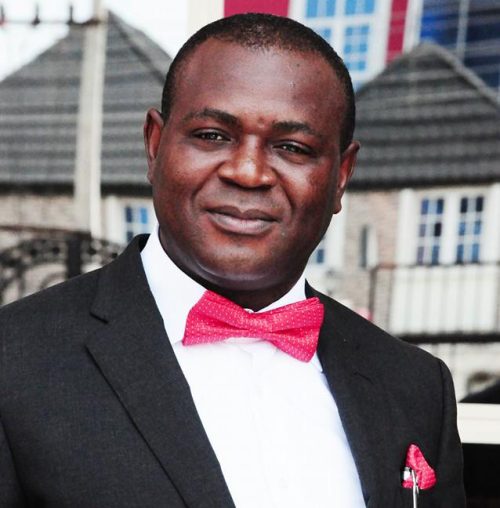
133m Nigerians Lack Access to Financial Inclusion, Risk Poverty—Adeduro 

Mr. Mayowa Adeduro

Managing Director/CEO

Tangerine General Insurance Limited

Mr. Mayowa Adeduro, Managing Director/CEO, Tangerine General Insurance Limited, says that over 133 million Nigerians are at the risk of dying of poverty due to lack of access to financial inclusion.

Adeduro, who spoke at the SUPERNEWS Nigeria Fintech23 Conference in Lagos added that there is a nexus among poverty, education and financial inclusion, noting that this is the reason the Federal Government needs the contribution and action plan of many stakeholders to achieve the goal.

“The banking sector just have 50 percent of the adults in the banking circle. It is even worse in the insurance sector, which has less that one percent penetration level in terms of population.

The Tangerine General CEO said: “To resolve this, the adoption of fintech has been highlighted as a critical tool to the financial inclusion drive. There is need for fundamental investment of infrastructural development in IT and Fintech as being done in Europe and other developed economies.

“There is also the need to have massive education because the illiteracy rate that we have at present cannot sustain the type of financial infrastructure that we are clamouring for. So, companies need to do more in investing in educating the people.”

Also speaking at the event, Mr. Oluseye Olusoga, the Group CEO of Parthian, welcomed innovations to be created by opportunities and challenges inherent in embracing Fintech as a tool for promoting financial inclusion in the country.

“Opportunities yes, but there are also challenges. We know the infrastructural challenges. We know that sometimes, the Fintech fails and it comes with a lot of concerns but l am not worried about this because the interesting thing you see is that when technology comes up and you have more advancements and you see more customers’ needs, it creates innovation and that innovation is what we need” he said.


Hot this week

What Every Brand, Tourism Board, Communications Leader Can Learn from Ojude Oba 2026

The Ojude Oba Festival is no longer merely one...

Understanding Why Corporates Need Credit Rating

As we transition into the second half of 2026,...

SERAP Sues NNPCL Over Alleged ‘Failure to Account for N5.9bn Rebranding Cost’

The Socio-Economic Rights and Accountability Project (SERAP) has filed...

RMB Supports Ministry of Finance Nigeria in Unlocking Regional Trade

RMB recently played a central role in concluding a...

Obasanjo Calls for National Drive to Develop Nigeria’s Adire Industry at Ecobank Adire Lagos Experience

Former President of Nigeria, Olusegun Obasanjo, has called for...

Topics

How Nigerian Politics Rivals Nollywood for Drama

In our series of letters from African journalists, novelist and writer, Adaobi Tricia Nwaubani looks at why Nigerians are hoping to be entertained by a crackdown on corruption. Two major industries in Nigeria share similar elements of melodrama and wildly implausible plots -films and politics.

Sovereign Trust Insurance at the 2025 CIIN Insurance Week

Members of staff of Sovereign Trust Insurance Plc flanked...

Paylater, Credit Mobile App in Nigeria Tops 1m Customers

In Nigeria, a country of nearly 200 million people,...

Farmcrowdy Wins 2018 Digital Business of the Year Award in Africa

Farmcrowdy, Nigeria’s first and leading digital agriculture platform on...

Sovereign Trust Insurance Reports N687m Profit in 2020, Up 37%

Mr. Olaotan Soyinka Managing Director/CEO Sovereign Trust Insurance Plc In spite of...

Intra-Africa Trade Set for Greater GDP Growth

As growth in developed markets such as Europe, China...

‘Cost of Finance Too Expensive in Africa’

“I would say the biggest challenge companies face is the cost of finance. Funds are very expensive in Africa,” says Jonty Levin, a Partner at financial advisory and structuring specialist, Alkebulan. There are two main reasons why the cost of finance generally remains high across the continent, according to Levin. One is the perceived risk associated with investing in African companies, and another is the shallow financial markets, where limited supply is rationed through higher costs.







